Emotions · 7 min read
Why Men Struggle to Cry
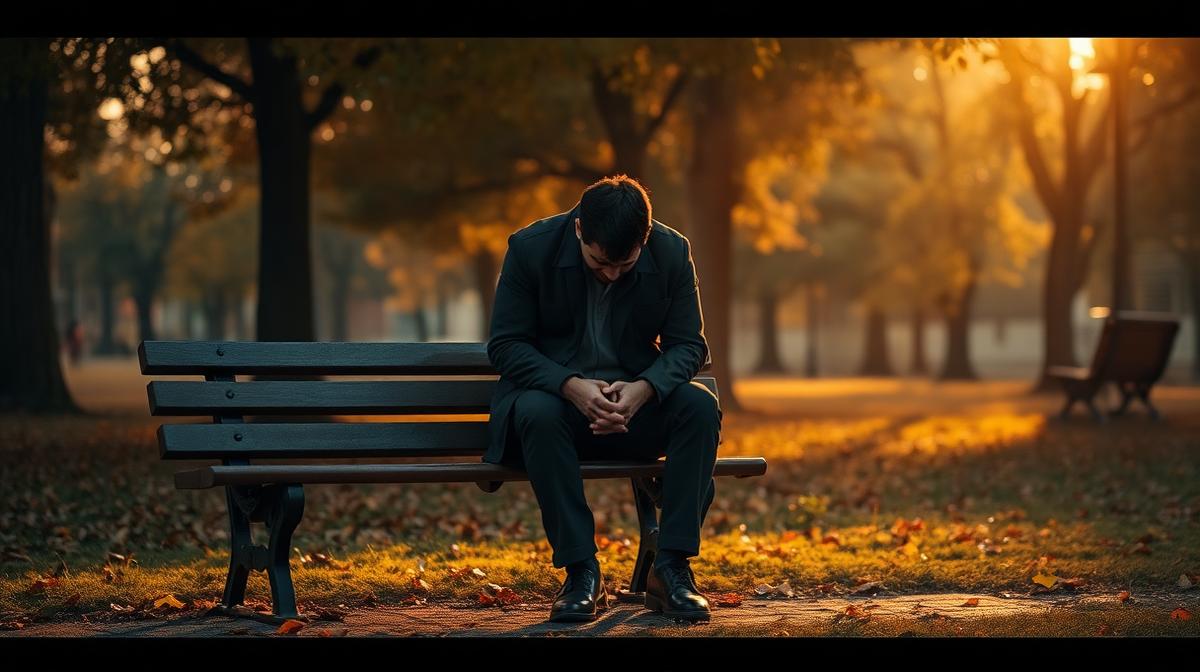
When was the last time you cried? If you're a man in the UK, there's a good chance you can't remember. Or if you can, it was probably alone, in the car, in the shower, at 3am when no one could see. Not because crying is rare in men, but because it's hidden. Suppressed. Shamed out of them before they're old enough to understand why.
This isn't a small thing. The inability to cry, or the belief that crying is unacceptable, is one of the most visible symptoms of a much deeper problem: the systematic emotional shutdown that affects millions of men across Canterbury, Kent, and the wider UK.
Where does the message come from?
Boys don't cry. Man up. Stop being soft. Toughen up. These phrases are so common they've become cultural wallpaper. Most men in the UK can recall hearing some version of them before the age of ten, from fathers, teachers, coaches, peers, and the media.
The message is clear and consistent: your emotions are a problem. Sadness is weakness. Vulnerability is dangerous. The only acceptable emotions for men are anger and humour, and even humour is often used as a mask for pain.
Research from the University of Cambridge found that by age five, boys have already learned to suppress their emotional expressions to match cultural expectations. By adolescence, the neural pathways for emotional processing begin to atrophy from disuse. By adulthood, many men are genuinely unable to access their emotions, not because they don't have them, but because the connection has been severed.
The role of fathers and male role models
For many men in Canterbury, Kent, and across the UK, their father was the first example of how to be a man. If that father was emotionally unavailable, stoic, distant, angry, or absent, the lesson was absorbed without words: men don't feel. Men don't cry. Men don't need comfort.
This isn't about blaming fathers. Most of them were carrying the same conditioning from their own fathers. It's a generational transmission of emotional suppression, and breaking the cycle requires conscious effort.
What happens when men can't cry
Tears aren't just an emotional release. They serve a genuine physiological function. Crying activates the parasympathetic nervous system, reduces cortisol levels, and releases oxytocin and endorphins. In plain terms: crying helps regulate your nervous system and literally makes you feel better.
When that outlet is blocked, the pressure has to go somewhere. And it does.
Anger becomes the default
For many men, anger is the only emotion that feels permissible. Sadness, fear, grief, shame, they all get funnelled through anger because anger feels powerful rather than vulnerable. The man who shouts at his partner over a trivial argument may actually be grieving something he's never been allowed to grieve.
Anxiety and depression take hold
Unexpressed emotion doesn't vanish. It accumulates. It becomes the background hum of anxiety that never quite lifts, the low-grade depression that gets dismissed as tiredness, the restlessness that no amount of exercise or productivity can fix.
The Mental Health Foundation reports that men in the UK are less likely to seek help for depression and anxiety, not because they experience them less, but because they've been conditioned to endure in silence.
Physical health deteriorates
The body keeps the score. Men who chronically suppress emotions show higher rates of cardiovascular disease, hypertension, chronic pain, and immune dysfunction. A landmark study from Harvard School of Public Health found that emotional suppression was associated with a 30% increased risk of premature death from all causes.
Relationships suffer
Emotional availability is the foundation of intimacy. When a man can't access or express his emotions, his relationships become transactional rather than connected. Partners feel shut out. Children learn the same patterns. The cycle continues.
Somewhere along the way, emotional suppression got rebranded as strength.
The difference between not crying and being strong
Somewhere along the way, emotional suppression got rebranded as strength. The stoic man became the ideal. But there's a crucial difference between genuine emotional resilience and the inability to feel.
True strength isn't the absence of emotion, it's the capacity to hold emotion without being overwhelmed by it. A man who can feel his grief and still function isn't weak. He's integrated. He has access to the full range of human experience, and he can choose how to respond rather than reacting from a place of suppression.
The man who never cries isn't necessarily strong. He may simply be disconnected, from himself, from the people he loves, and from the life he's trying to live.
Safety
A confidential space, held with care.
Steadiness
Move at your own pace, week by week.
Growth
Quiet steps that build over time.
How men can start to reconnect with their emotions
Understand that this is learned, and can be unlearned
The inability to cry isn't hardwired. It's conditioned. And conditioning can be updated. This doesn't happen overnight, and it doesn't happen through willpower alone. It happens through safe environments, consistent practice, and the presence of other men who are doing the same work.
Find a space where emotions are welcome
This is where environments like MENd Together's Men's Circle in Canterbury, Kent become essential. When a man sits in a room with other men who are learning to feel, who are awkward and uncertain and brave enough to try, something shifts. The permission comes not from a therapist telling you it's okay to feel, but from seeing another man do it first.
For men outside Canterbury or Kent, our online Peer Support group offers the same quality of emotional connection for men across the UK.
Start with the body, not the mind
If you've been disconnected from your emotions for years, trying to access them through thinking won't work. Start with physical sensation. Notice the tightness in your chest, the heaviness in your stomach, the ache behind your eyes. These are your emotions trying to get your attention. Don't analyse them. Just notice them.
Let it be imperfect
The first time you cry after years of not crying, it might feel terrifying. It might come out as anger, or as a strange numbness that breaks open unexpectedly. It might happen in the middle of a film, or while reading to your child, or staring at the ceiling at 2am. There's no right way to start feeling again. There's only the willingness to stop fighting it.
men experience trauma in their lifetime
we aim to respond, usually sooner
to start — no commitment, no pressure
The men who came before you
At MENd Together in Canterbury, we've sat with men who haven't cried since childhood. Men who thought something was wrong with them because they couldn't feel. Men who were terrified of what would happen if they let the walls down.
And we've watched those same men, over weeks and months, begin to soften. Not because they were told to. Because the space allowed it. Because other men showed them it was possible. Because they discovered that the thing they'd been running from their whole lives, their own emotions, wasn't the enemy. It was the way home.
You don't have to cry to heal, but you might need to learn how to feel
This article isn't about forcing tears. It's about recognising that the capacity for emotional expression is a fundamental human need, and that millions of men across the UK have been denied access to it.
If you're a man in Canterbury, Kent, or anywhere in the UK who's ready to start reconnecting with the parts of yourself you've shut down, MENd Together is here. Our Men's Circle is free. Our Peer Support is gentle. Our peer support is personalised. And none of it requires you to be anything other than exactly where you are right now.
The door is open. You just have to walk through it.
Frequently Asked Questions
Is it really 'unhealthy' to not cry?
Not crying isn't the problem in itself. Some men feel things deeply and process emotion in other ways. The concern is when the inability to cry is part of a wider pattern of emotional shutdown, where joy, sadness, grief and tenderness all feel out of reach. Crying is one valve. When all the valves are closed, pressure builds elsewhere, often as anger, anxiety, or physical illness.
Why do I cry at the smallest things now after years of nothing?
When the dam holding back years of unfelt emotion finally cracks, it can come out at unexpected moments, a song, an advert, a kind word. This isn't weakness, it's release. Your system is finally letting through what it's been holding. It usually settles with time as the backlog moves through.
Will I be judged in a Men's Circle if I cry?
No. Tears in a Men's Circle are treated with respect, not embarrassment. You'll often see other men nod, lean in, or quietly hold the space. For many men, it's the first place they've ever felt safe to let go without being told to 'man up'.
How can I let myself feel again without feeling overwhelmed?
Slowly, and ideally with support. Trying to 'force' feelings often backfires. The work is gentle: noticing sensations in the body, naming what you feel without judgement, and allowing small amounts of emotion to move through. A trauma-informed coach or peer space can help you build this capacity safely.
Is medication or therapy ever needed for this?
It can be, especially if numbness is part of depression or trauma. Speaking with your GP or a trauma-informed therapist can help you understand what's underneath. Many men benefit from a combination of professional and peer support.
How it usually goes
Reach out
Send a quiet message or fill in our form.
A conversation
We aim to respond within 48 hours, usually sooner.
First step together
Join a circle, a group, or a one-to-one session.
Ongoing support
Move at your own pace — there's no rush.
Continue your reading
Why Men Struggle to Name Emotions
Emotional suppression in men is learned, not weakness. MENd Together in Canterbury, Kent helps men across the UK reconnect with how they feel.
Anxiety in Men: A Plain-English Guide
Anxiety in men often looks like irritation, overwork or insomnia, not panic. A plain-English guide from MENd Together in Canterbury, Kent for men across the UK.
Depression in Men: How It Hides
Depression in men often looks like anger, exhaustion or numbness. How to spot it and find support in Canterbury, Kent and across the UK.
A supported next step
Recovery Hub
Grounding tools and a soft landing for the moments that feel like too much.
If this resonated, we're here.
No pressure to commit to anything. Just a conversation, whenever you're ready.