Emotions · 7 min read
Nature and Men's Mental Health
It’s a strange thing, the pressure of a four-walled room when your own head feels like a box you can’t get out of. Life can shrink a man’s world down to the space between his ears, a relentless replay of worries, frustrations, and the quiet, heavy feeling that something isn’t right. You carry it in your shoulders, in your jaw, in the shallow-but-fast rhythm of your breathing. You feel keyed up and exhausted, all at once. And you might feel like you’re the only one.
There’s a reason a long walk through the woods, a quiet hour spent watching the sea, or the sharp gasp of cold water on your skin can feel like coming home to yourself. It isn’t magic or some romantic notion. It’s biology. Your body, your brain, your nervous system are wired to respond to the natural world. If you're a man in Canterbury, Kent, or anywhere in the UK who's struggling with the weight of it all, this is an invitation. Not to fix everything at once, but to start using a powerful, practical tool that’s right on your doorstep.
The Science, Made Simple
We’re not talking about flimsy, feel-good ideas here. The evidence for nature’s impact on mental health is robust and growing, coming from respected institutions all over the world. When scientists talk about the benefits, they are measuring real, physical changes in the human body.
A landmark study in 2019, published in the journal Scientific Reports, looked at data from 20,000 people. It found that spending at least 120 minutes a week in nature was linked to significantly better health and wellbeing. That’s the headline figure: two hours a week.
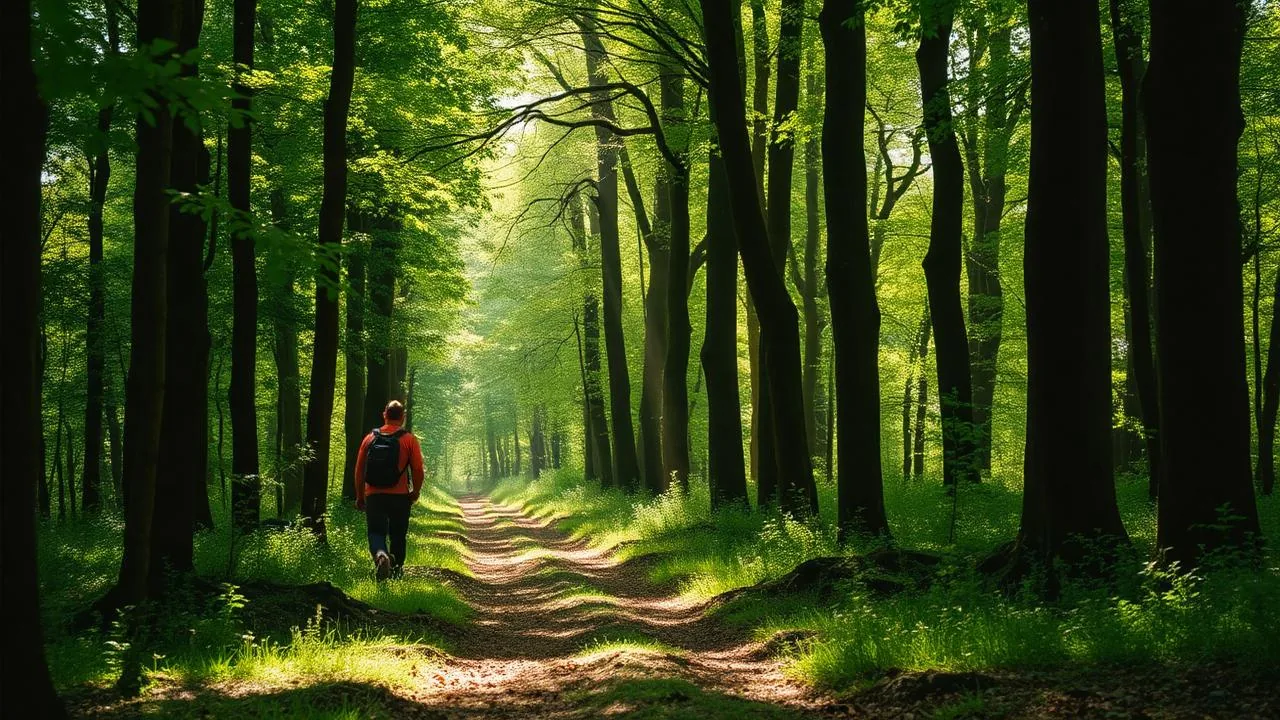
Think about that. It’s not a marathon. It’s not an unachievable, high-performance goal to beat yourself up with. It’s about seventeen minutes a day. It’s a half-hour walk at lunchtime three or four times a week. It's a longer walk through Blean Woods on a Saturday morning. For most men, however busy and stressed they are, this is possible.
The research, supported by studies from universities like Exeter and Edinburgh, consistently shows that time in green or blue spaces leads to a measurable drop in cortisol. Cortisol is the body’s primary stress hormone. It’s the chemical that fuels the ‘fight or flight’ response. Useful in a genuine crisis, but corrosive when it’s switched on all the time. Lowering cortisol means lower blood pressure, a calmer heart rate, and a feeling of coming down from high alert. It’s giving your body a genuine, physiological break.
What's Actually Happening in Your Body and Brain?
So why does being outside work so well? It’s not just about a change of scenery. It’s about a fundamental shift in how your internal systems operate, giving you respite from the demands of modern life.
It gently regulates your nervous system
Many of us live in a state of chronic activation. This is the sympathetic nervous system state, the body’s accelerator pedal. It’s designed for short bursts of action, but modern life can get it stuck on. You feel restless, irritable, and unable to properly switch off. Your sleep is poor. You’re always waiting for the next thing.
Natural environments, especially woodland and spaces with water, encourage a shift into the parasympathetic state. This is the body’s braking system. It’s the ‘rest and digest’ mode. Your breathing deepens, your heart rate slows, and your body can finally get on with repair and recovery. For a man carrying the quiet weight of chronic stress or past trauma, this gentle, automatic regulation is exactly what his system is crying out for.
It quiets the racing mind
We all know it. The internal monologue that loops over and over again, replaying a conversation from yesterday or rehearsing a difficult one for tomorrow. This pattern of repetitive negative thinking is called rumination, and it’s a core feature of both anxiety and depression. It’s exhausting and it solves nothing.
Research using brain scans has shown that walking in a natural environment reduces blood flow to the part of the brain linked to rumination. The mental chatter softens. It doesn’t mean the problems go away, but your mind is given a chance to get out of the groove it’s stuck in. This creates mental space, allowing for new perspectives or, equally valuable, just a bit of peace and quiet.
It restores your exhausted focus
Our attention is under constant assault. Emails, notifications, social media, rolling news. Our brains are forced into a state of ‘directed attention’, where we have to consciously focus and filter out distractions. This is a finite resource, and when it’s depleted, we feel foggy, reactive, and struggle to make clear decisions.
Nature offers a different kind of stimulation, known as ‘soft fascination’. Watching leaves move in the wind, listening to the sound of a river, or gazing at clouds doesn’t demand your focus, it gently draws it. This process is restorative. After even a short time, men report feeling more present, clearer, and more grounded. Your ability to concentrate on the things that matter is replenished.
It offers a space without expectation
Think about your day. At work, you have a role to perform. At home, you might be a partner, a father, a problem-solver. There are expectations, spoken or unspoken. There are targets to hit, people to please, things to fix. For many men, it feels like they are always being watched, always being measured.
The woods don’t care about your job title. The sea doesn’t ask what you earn. The sky doesn't judge your decisions. In nature, you can just be. You can be tired, angry, sad, or nothing in particular. This absence of performance pressure is a profound relief. It's a space to take off the armour for a while and just walk. For men who are exhausted by the burden of being seen, nature offers a precious chance to become unseen.
Here in Kent, we are genuinely spoilt for choice.
Your Kentish Toolkit: Making the Most of the Garden of England
Here in Kent, we are genuinely spoilt for choice. We live in a county packed with ancient woodland, a varied and dramatic coastline, and gentle rolling hills. From our base in Canterbury, you are a short drive or even a walk away from some of the best natural resources in the South East.
Here are just a few ideas to get you started:
- Blean Woods National Nature Reserve: Just on the edge of Canterbury, this is one of England’s largest ancient woodlands. It's a place to feel enclosed and held by the trees, to walk for hours on well-marked paths, and to find deep quiet.
- The Kentish Coast: You have so many options. The gentle slopes and classic seaside feel of Tankerton and Whitstable are perfect for an easy, accessible walk. For something more dramatic, head east to Thanet. The chalk cliffs of Botany Bay and Joss Bay offer vast, open skies and the humbling power of the sea.
- The River Stour: The Great Stour Way offers miles of flat, riverside walking right from the heart of Canterbury, out through Chartham and beyond. The sight and sound of water is incredibly calming to the nervous system.
- The North Downs Way: For a longer day and a proper physical challenge, sections of this national trail offer spectacular views across the county. Walking a stretch near Wye or Dover gives you a real sense of perspective.
- Local Parks and Green Spaces: Don't underestimate the power of what's nearby. Places like Dane John Gardens in Canterbury, Mote Park in Maidstone, or Lower Leas Coastal Park in Folkestone all count. They are valuable pockets of green that can give you a vital daily dose of nature.
Men living in Ashford, Maidstone, Margate, Folkestone, or Dover are all within easy reach of these places and more. The Kent landscape is one of the greatest, and most underused, mental health assets we have.
Safety
A confidential space, held with care.
Steadiness
Move at your own pace, week by week.
Growth
Quiet steps that build over time.
How to Start, and How to Keep Going
Knowing that nature is good for you is one thing. Building it into your life, especially when you’re feeling low, is another. The key is to make it practical, achievable, and sustainable.
Make it boringly regular
One epic, exhausting hike a month is less effective than a few shorter walks every single week. Rhythm and routine are what your nervous system understands. Consistency matters more than intensity. Try tying it to an existing habit. A ten-minute walk around the local park after you finish work, before you step into the family home. A walk to the shop instead of driving. Start small and build the rhythm.
Go alone sometimes, and with others at other times
There is a time for solitude. A solo walk gives you the space to let your thoughts unspool without interruption. It’s a time to process, to listen to yourself, and to just be.
But there is a unique power in walking with another man, or a small group of men. Side-by-side, there is less pressure than talking face-to-face. You don’t have to maintain constant eye contact. Silences feel more comfortable. It’s often in these moments, looking at the path ahead rather than at each other, that the most honest and important conversations happen.
Put your phone in your pocket
If you are scrolling through your phone, listening to a podcast, or taking calls, you are not really in nature. You are in a digital bubble that you happen to be moving through the woods. To get the full benefit, you need to unplug. You don’t have to turn it off, but put it in your pocket. Give yourself an hour. Notice what you see, what you hear, what you can smell. Feel the air on your skin. This isn't about some hippy-dippy mindfulness, it's about letting your brain and your senses actually engage with the world in front of you.
Combine it with real conversation
Next time you’re planning to catch up with a friend you haven’t seen in a while, suggest a walk instead of a pint. The pub can create pressure, but a walk creates space. Some of the most meaningful connections and conversations we’ve witnessed at MENd Together have happened not in a therapy room, but on a muddy path through the trees.
Frequently Asked Questions
What if I don't live in the wild Kent countryside?
You don't need to be in a pristine wilderness to feel the benefits. A city park, a walk along a canal, a playing field, even a street with a few trees all count. Research shows that even small pockets of urban green space have a positive effect. It's about finding the nature that is accessible to you, right now.
I feel too low to even leave the house. What then?
This is a very real and common experience. Depression and anxiety can make the smallest task feel like climbing a mountain. The trick is to be honest about that, and start absurdly small. Don’t aim for a one-hour walk. Just open the window and breathe the air for a minute. The next step might be to stand on your doorstep for five minutes. Then a walk to the end of your street. These small acts are a way of gently challenging the lies that depression tells you about what you’re capable of.
Is spending time in nature a replacement for therapy or medication?
No. It is a powerful ally, not a replacement. If you need professional support from a therapist or your GP, you should absolutely seek it. Nature can be a vital part of a wider toolkit for recovery. It supports the work you do in therapy, it can help manage the side effects of medication, and it provides a foundation of physical and mental wellbeing that makes everything else more effective. The men we support often find that combining nature with peer support, peer support, or therapy is the most powerful approach.
Why does it feel different walking and talking with other men?
For many men, there's a lifetime of conditioning that says you have to be strong, silent, and self-reliant. Being in a group of men who are also trying to be more honest can be a huge relief. You realise you're not the only one. Walking together, as we said, removes the intensity of face-to-face talk. It builds camaraderie and trust, creating a space where you can share what's really going on without fear of judgement.
Your Next Step, At Your Pace
The evidence is clear, and the opportunity is right outside your door. The Kent countryside and coast offer a free, reliable, and powerful way to support your mental and emotional health. It’s not about fixing everything, it’s about giving your body and brain a regular chance to down-regulate, to recover, and to find a quieter space.
If you feel that talking about what’s going on would also help, we’re here. At MENd Together, we offer spaces for men to connect and talk honestly. Our approach is grounded in lived experience, not clinical jargon.
- Our Men's Circles in Canterbury offer a place to meet and share with other local men.
- Our online Peer Support groups bring men together from across the UK.
- Our one-to-one Peer support provides focused, personal support for moving forward.
You don’t have to have it all figured out. You can get in touch just to ask a question. The first step is often the hardest, but you don’t have to take it alone. The path is there. We can walk it with you.
How it usually goes
Reach out
Send a quiet message or fill in our form.
A conversation
We aim to respond within 48 hours, usually sooner.
First step together
Join a circle, a group, or a one-to-one session.
Ongoing support
Move at your own pace — there's no rush.
Continue your reading
Why Men Struggle to Name Emotions
Emotional suppression in men is learned, not weakness. MENd Together in Canterbury, Kent helps men across the UK reconnect with how they feel.
Why Men Struggle to Cry
Most UK men were taught not to cry, and the cost is huge. MENd Together in Canterbury, Kent helps men reconnect with their emotions.
Anxiety in Men: A Plain-English Guide
Anxiety in men often looks like irritation, overwork or insomnia, not panic. A plain-English guide from MENd Together in Canterbury, Kent for men across the UK.
A supported next step
Recovery Hub
Grounding tools and a soft landing for the moments that feel like too much.
If this resonated, we're here.
No pressure to commit to anything. Just a conversation, whenever you're ready.