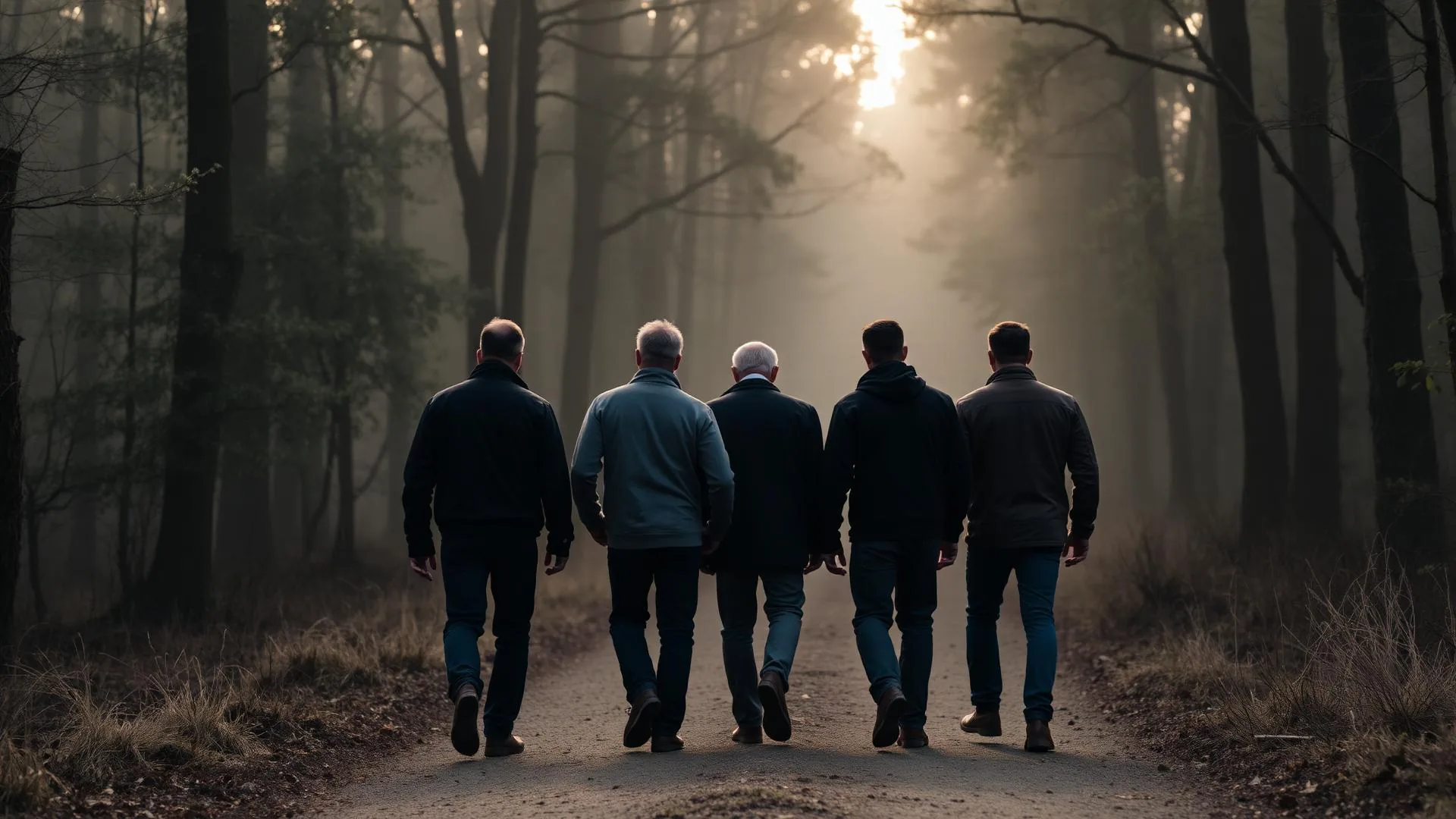
For partners · 7 min read · Last reviewed June 2026
Why Organisations Are Exploring More Human-Centred Wellbeing Approaches
Wellbeing provision designed for the average user often reaches very few real people. Increasingly, organisations are recognising that the more standardised the offer, the more men slip through it. Human-centred approaches, designed around how men actually behave, speak, and seek support, tend to land more reliably.
This article is for partners thinking about how their wellbeing offer could become more human-centred, particularly for men.
What human-centred actually means
It means designing provision around the real lives of the people meant to use it, rather than around the convenience of the system delivering it. For men this often means: shorter first steps, less paperwork, side-by-side rather than face-to-face, community rather than clinic, peer voices rather than expert ones at the entry point.
It does not mean lowering clinical standards. It means designing the doorway differently so that the man who needs the clinical room can find it.
Why the shift is happening
Three reasons. Mainstream provision is hitting its limits. Frontline teams are noticing what works and what doesn't with men in particular. And funders and commissioners are increasingly interested in approaches that reach the men who would otherwise never have arrived.
Human-centred isn't a label. It's a discipline of asking, again and again, whether the offer is being shaped by what would actually help the man in front of you.
What MENd brings to this
Our community provision is deliberately designed around how men actually move toward support, gradually, indirectly, often via friends or family, often in the small hours of a hard week. We design entry points that don't require men to identify as struggling. We design rooms that don't ask men to perform. We try to remove every avoidable friction from the first step.
We're a growing CIC. We bring design willingness and lived experience rather than a portfolio of large contracts.
What partnership work could look like
We are keen to explore human-centred design work alongside NHS teams, councils, charities and workplaces, particularly around how their wellbeing offer could become more accessible to men. Possible shapes include co-design workshops, prototype community offers, joint funding for design-led pilots, and shared learning across organisations.
A respectful invitation
If your organisation is thinking about how its wellbeing offer could become more genuinely human-centred, particularly for men, we'd welcome a conversation. The Partnerships page has a short enquiry form.
Questions men often ask
- Is this about user research?
- Partly. More fundamentally it's about designing provision around the real lives and patterns of the men meant to use it, rather than around the system's convenience.
- Can you support our team to redesign aspects of our own offer?
- We're open to collaborative design work alongside partner teams, drawing on our lived-experience and community insight. We'd approach this as genuine co-design rather than consultancy.
- Do you bring formal design methodology?
- We bring grounded practical design, shaped by community work with men. For partners who want a more formal design framework alongside, we'd happily collaborate with a partner specialised in that.
- How do we start?
- A short note via the Partnerships page is enough.
Community ways forward
Nothing here is treatment, and none of it costs money. Pick whichever feels like the smallest possible next step.
Workplace wellbeing for employers
Men's circles, workshops and one-to-one support shaped around your workforce. Request a proposal.
Partnerships at MENd
Collaborative design and co-developed programmes.
Recovery Hub
An example of a deliberately low-friction entry point designed around how men actually reach out.
Walk & Talk
An example of human-centred design, community support that doesn't require sitting in a room.
Contact us
Talk to us about human-centred design partnerships.